Most tankless water heater repairs in Connecticut come down to four things: scale in the heat exchanger, an ignition or flame sensor fault, a venting problem, or a flow issue at the fixtures. Many of them are fixable, and a tankless unit is worth repairing far more often than an old tank, because it is built to last much longer.
This guide covers what each common problem looks like, what you can safely check yourself, and when to call a licensed technician.
Why Tankless Units Fail Differently From Tanks
A tank water heater keeps 40 or 50 gallons hot all day. A tankless unit heats water only while a tap is open. It fires a large burner, pushes water through a narrow heat exchanger and watches the result with sensors, all in a few seconds.
That design is why tankless problems look different. A tank usually fails slowly: it rumbles, runs out sooner, then leaks. A tankless unit tends to stop and show a code. The good news is that the code points to a cause, and the cause is often a part or a cleaning, not the whole unit.
According to ENERGY STAR, tankless water heaters have a life expectancy of about 20 years, much longer than a conventional tank. So a unit that is 6 or 8 years old and throwing a code is usually a repair job, not a replacement.
The Problems We See Most on the Shoreline and in the River Valley
Scale in the heat exchanger
This is the most common cause of tankless trouble around Chester, Deep River, Haddam and Essex. Many homes here are on private wells, and well water often carries more minerals than town water. Those minerals coat the inside of the heat exchanger over time.
Signs of scale:
- Hot water that swings between hot and lukewarm
- Lower flow at the shower than you used to get
- A code the manual describes as overheating or scale build-up
- The unit shutting off part way through a shower
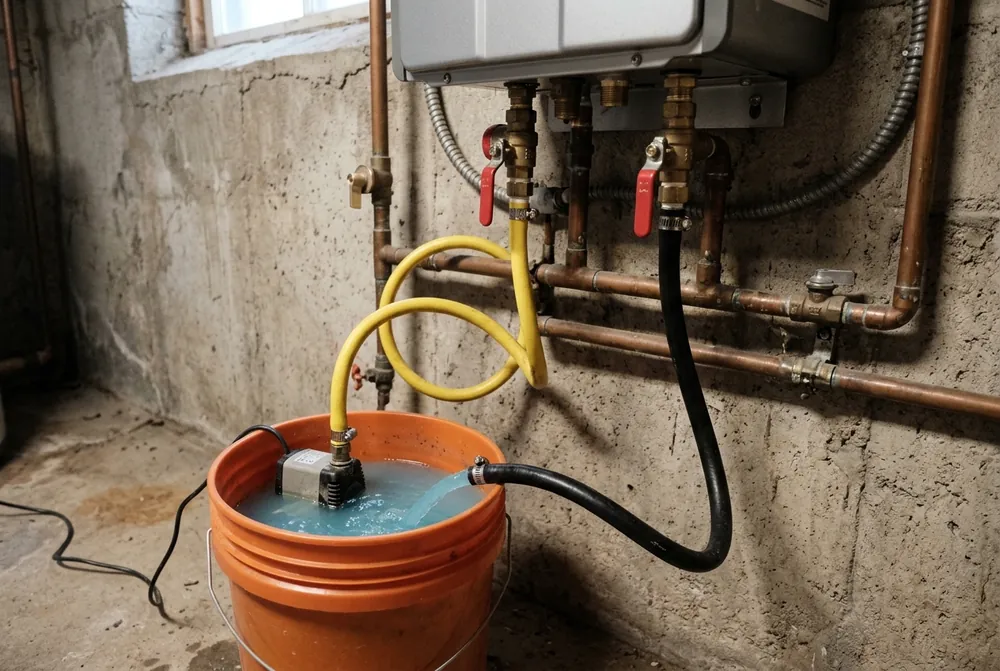
Scale is usually cleared with a descale: a cleaning solution pumped through the unit through its service valves. If the unit has no service valves, we add them so the next descale is quick. Our water heater maintenance service covers the yearly descale that keeps this from coming back.
Ignition and flame faults
If the unit clicks but never lights, or lights and then shuts off, the problem is usually in the ignition or flame sensing. Common causes are a dirty flame rod, a failing igniter, low gas pressure, or air in a propane line after a tank refill.
On propane, check the obvious first: is there gas in the tank, and are other propane appliances working? Running out of propane and then refilling can leave air in the line, and the unit may need a few tries to light. If it still will not light, call us. Gas valves, burners and flame sensors are licensed heating work in Connecticut.
Venting and air supply errors
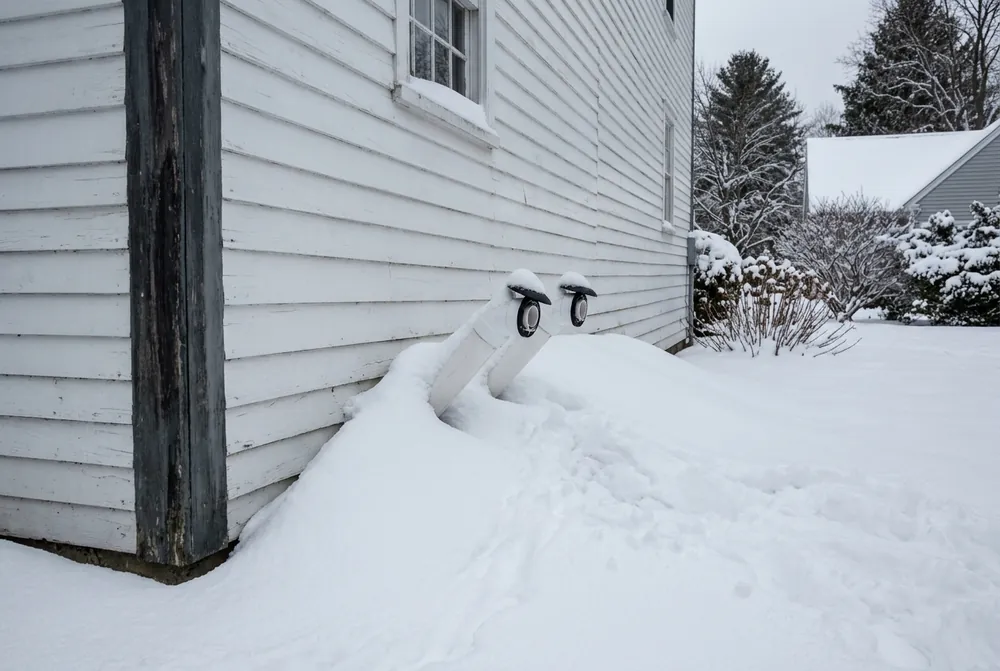
A tankless unit needs a clear vent and a steady supply of combustion air. Vent errors are common in winter here. Snow drifts, ice at the termination, leaves or a bird nest can all block the pipes on a side wall.
You can look at the vent pipes outside and gently clear snow or leaves from around them. Do not take apart any vent pipe. If the code comes back, or you smell exhaust in the house, turn the unit off and call. A venting problem is a safety problem, not just an inconvenience.
Flow problems: not enough hot water, or none at a single tap
A tankless unit needs a minimum flow before it fires. A clogged faucet aerator or shower head can drop the flow below that point, so one tap runs cold while the others are fine. Cleaning the aerator often fixes it.
If every tap is short of hot water in winter, the unit may be undersized for January groundwater, or two showers and the dishwasher are asking for more than it can heat. That is a sizing question. Our post on tankless vs tank water heaters in Chester explains why winter sizing matters so much here.
Leaks at the unit
Water dripping from a tankless unit can come from a fitting, a pressure relief valve, the condensate line on a condensing model, or, rarely, the heat exchanger itself. Fittings and valves are usually simple repairs. A leaking heat exchanger is a bigger decision, and the unit's age and warranty matter.
What an Error Code Is Telling You
Every brand uses its own codes, so a number on one unit means something different on another. Look up the code in the owner's manual, or on the label inside the cover, before you do anything else.
Broadly, codes fall into a few groups:
| Code group | What it usually points to | Who handles it |
|---|---|---|
| Ignition or flame failure | Gas supply, igniter, flame rod, gas valve | Licensed tech, after you check the gas supply |
| Overheat or scale warning | Scale in the heat exchanger | Descale, usually a maintenance visit |
| Vent or air pressure fault | Blocked vent, fan, pressure switch | Clear snow or leaves, then a tech if it returns |
| Flow or sensor fault | Aerators, inlet filter, flow sensor | Clean aerators, then a tech |
| Service or maintenance reminder | Time for a descale or inspection | Book a maintenance visit |
Write the code down, and take a photo of the display. If the code clears after a reset and comes back, that is a sign the cause is still there.
Safe Checks Before You Call
These are reasonable for most homeowners:
- Reset once. Turn the unit off and back on at its switch or controller. Note the code if it returns.
- Check the fuel. Gas valve open, propane tank not empty, other gas appliances working. On an electric tankless unit, check the breakers.
- Check the vent outside. Clear snow, ice or leaves from around the pipes without taking anything apart.
- Clean aerators on any tap with low or no hot water.
- Check the inlet filter if your manual shows where it is and the unit has isolation valves. Close the valves first.
Stop and call if you smell gas, see water coming from inside the cabinet, smell exhaust, or the same code returns after a reset. If you smell gas, leave the house and call your gas utility or propane supplier's emergency line from outside first.
Repair or Replace a Tankless Unit?
A tankless unit is usually worth repairing when:
- It is well short of its expected life, which ENERGY STAR puts at about 20 years
- The problem is scale, a sensor, an igniter, a fan or a fitting
- It has kept up with your household's hot water before
Replacement starts to make sense when the heat exchanger itself is leaking on an older unit, parts for the model are no longer available, or the unit was undersized from the start and never kept up in winter. If you are in that spot, we will tell you, and we can price a like-for-like swap so you can compare.
What Happens When You Call Guild
Start by texting us photos of the unit's label, the display with the code, and the area around the unit. We call you back, talk through what you are seeing, and give you a free phone estimate where the photos make that possible. If we need a closer look, we schedule a visit.
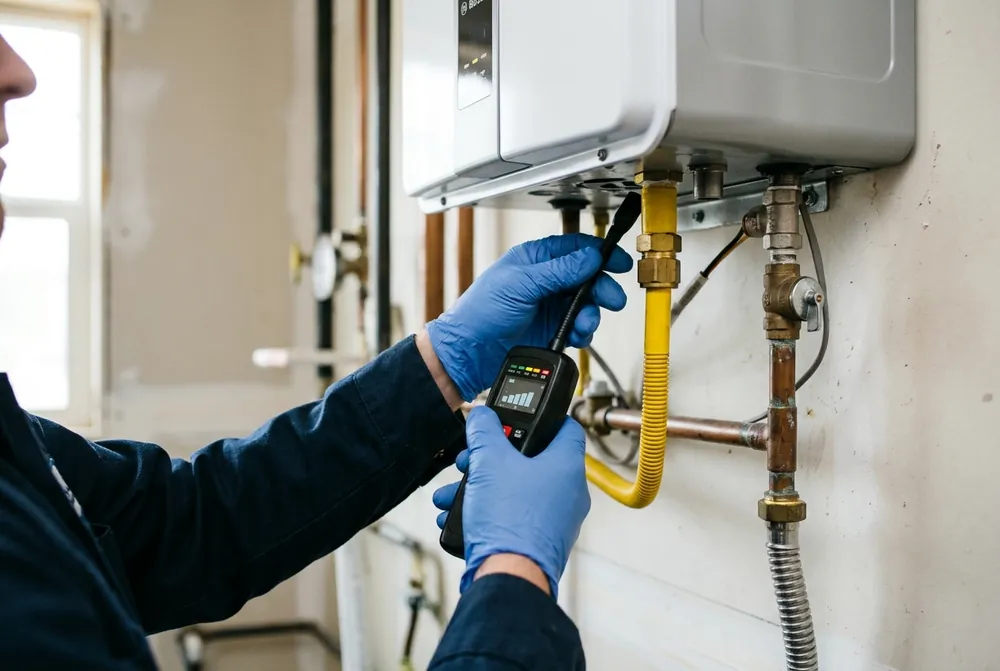
On site, a licensed technician checks the gas or power supply, ignition, venting, flow and the heat exchanger, then explains what failed before any work starts. Most tankless diagnoses and fixes take about 1 to 3 hours, and may include a descale if scale is the cause. We are open Monday to Friday, 8 AM to 4 PM.
Tankless Repair on the CT Shoreline and River Valley
Guild Water Heater Experts is an owner-operated, licensed and insured company based in Chester and run by Erik Anderson Sr. Our heating licenses (CT HTG.0410608-S1 and CT HTG.0405787-OE2) cover gas lines, burners and venting, and our plumbing license (CT PLM.0292074-P2) covers the water side, so one visit handles the whole unit.
Read more about our water heater repair service, or see water heater repair in Chester for local details. If your unit needs its yearly descale, our tankless water heater installation page explains how we fit service valves to make that easy.
Call (860) 510-6899, book online or text us photos for a free phone estimate.